Cashback vs Coupons: Which Saves More Money?
Posted on |
Every online shopper wants the same thing: paying less for the products they need.
Two of the most common ways to save money are cashback offers and coupon codes. Both methods can reduce your overall shopping costs, but they work very differently.
Some shoppers swear by coupons because they provide immediate discounts. Others prefer cashback because it rewards purchases after checkout and can accumulate over time.
So which one actually saves more money?
The answer depends on how you shop, what you’re buying, and whether you’re willing to combine multiple savings strategies.
This guide compares cashback and coupons to help you determine which delivers the greatest value.
Understanding Coupons
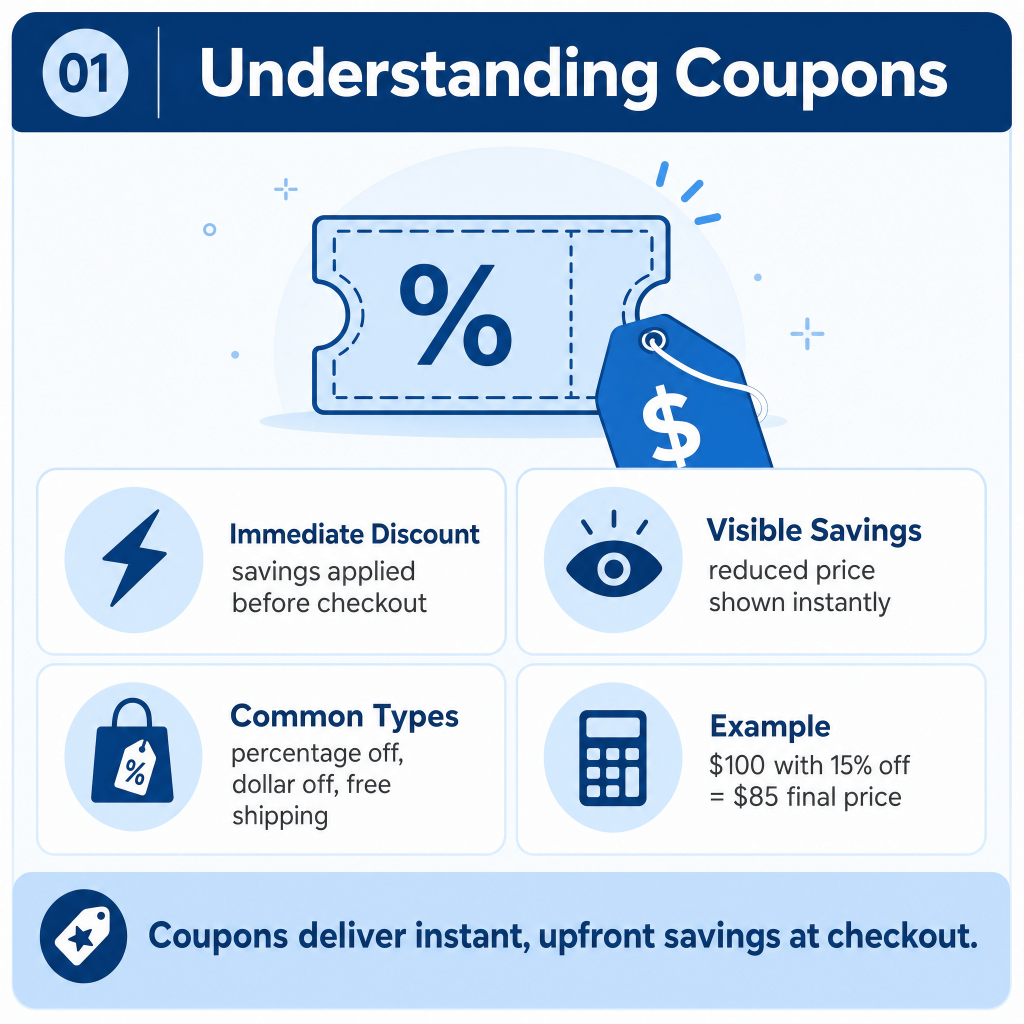
Coupons provide an immediate discount on a purchase.
Examples include:
- 10% off your order
- $20 off purchases over $100
- Free shipping
- Buy one, get one free
The savings are applied before you complete your purchase, which means you instantly see the reduced price.
Example
Original Price: $100
Coupon Discount: 15%
Final Price: $85
Your savings are immediate and visible at checkout.
Understanding Cashback
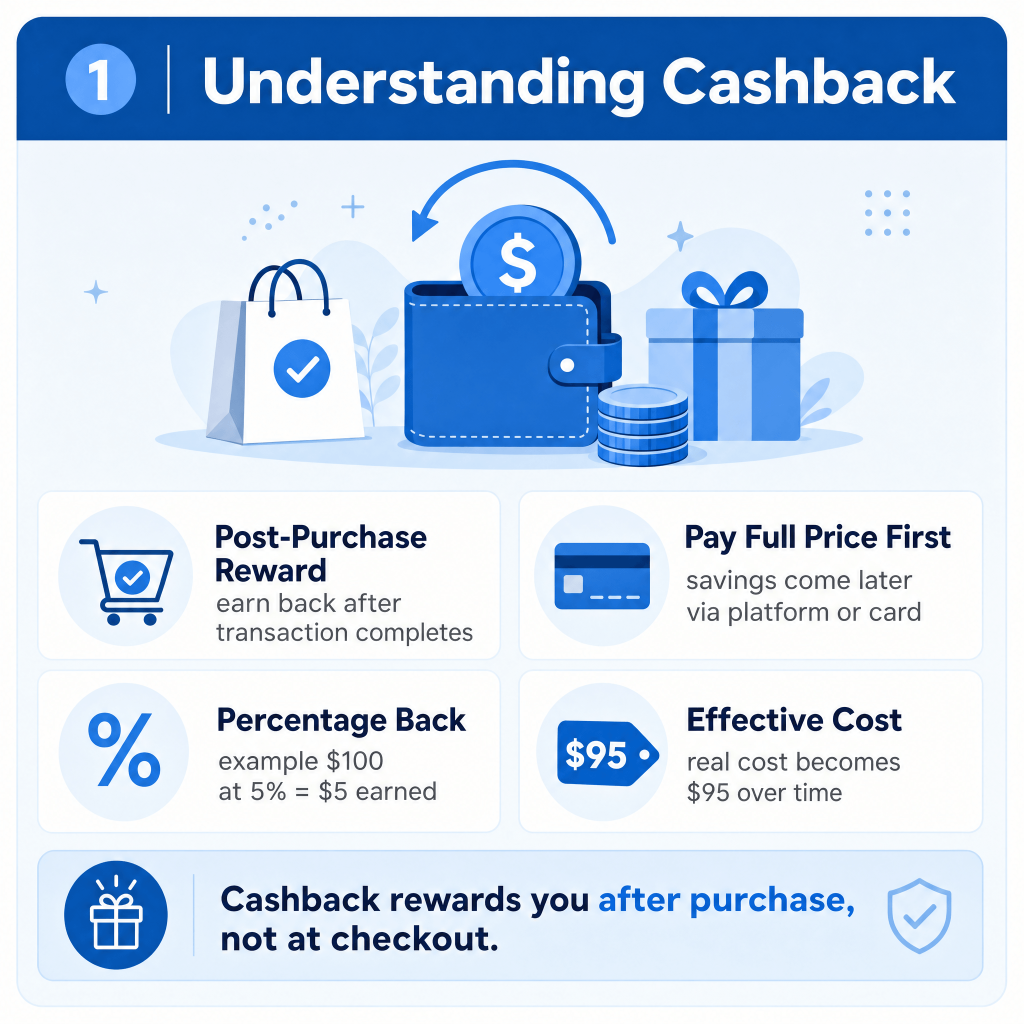
Cashback works differently.
Instead of reducing the purchase price upfront, cashback rewards you after the transaction is completed.
Example
Purchase Price: $100
Cashback Rate: 5%
Cashback Earned: $5
You initially pay the full $100, but later receive $5 back through a cashback platform, rewards program, or credit card.
Your effective cost becomes $95.
Quick Comparison
| Feature | Coupons | Cashback |
| Savings Timing | Immediate | After Purchase |
| Reduces Checkout Price | Yes | No |
| Requires Waiting | No | Yes |
| Easy to Understand | Yes | Yes |
| Long-Term Savings Potential | Moderate | High |
| Can Sometimes Be Combined | Yes | Yes |
Both approaches have advantages depending on the situation.
When Coupons Save More Money
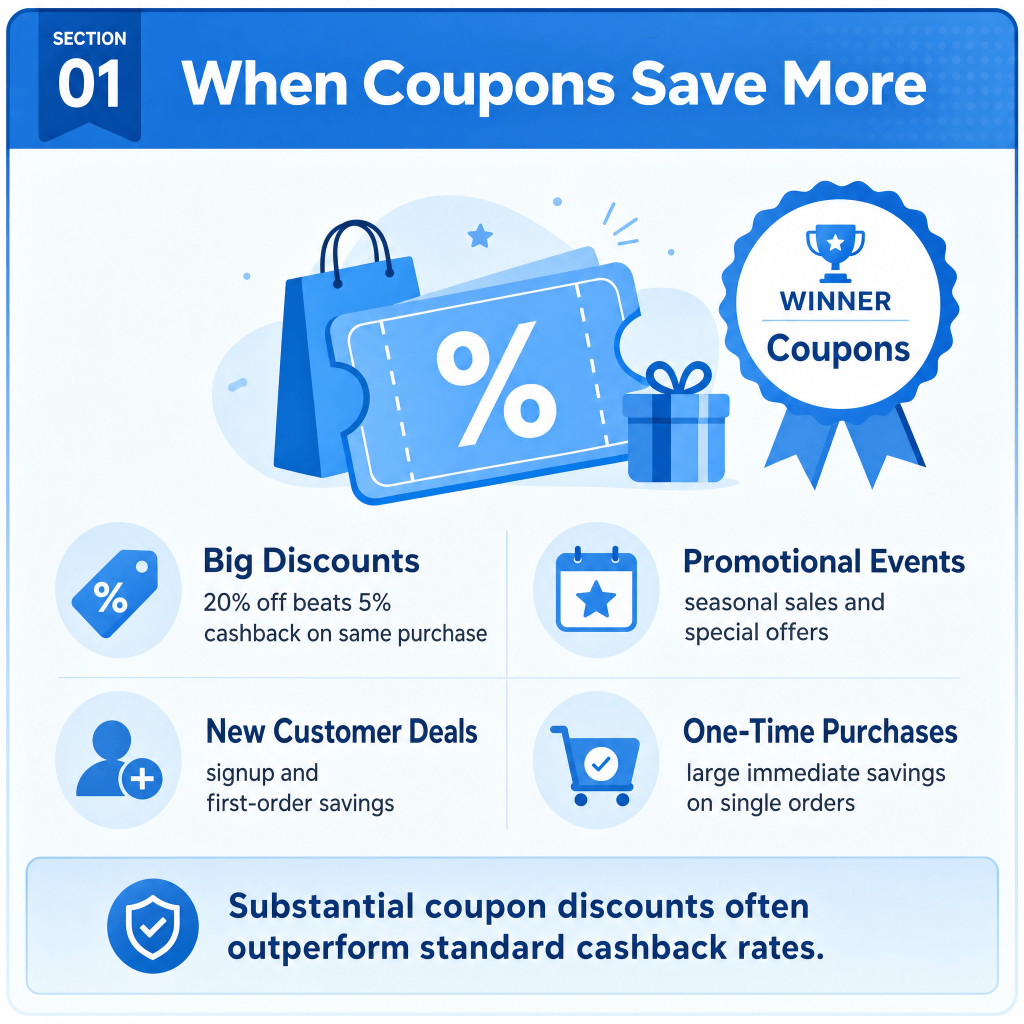
Coupons generally win when the discount percentage is substantial.
For example:
Coupon Scenario
Product Price: $200
Coupon Discount: 20%
Savings: $40
Cashback Scenario
Product Price: $200
Cashback Rate: 5%
Savings: $10
In this case, the coupon clearly provides the better deal.
Large promotional discounts often outperform standard cashback rates.
Best Situations for Coupons
Coupons are typically more valuable when:
- Retailers offer significant percentage discounts.
- Promotional events are active.
- New customer offers are available.
- Large-ticket purchases qualify for special savings.
When Cashback Saves More Money
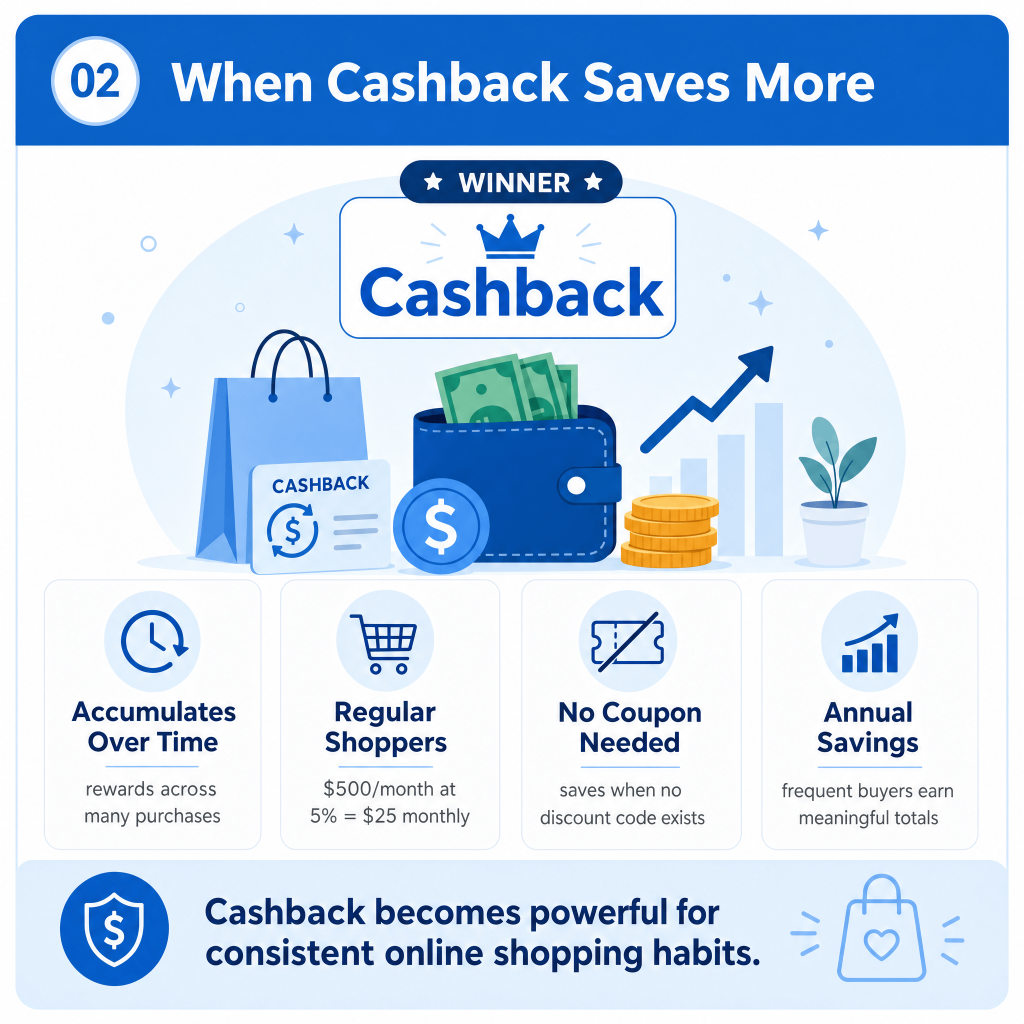
Cashback becomes more powerful over time.
Rather than focusing on a single purchase, cashback rewards accumulate across multiple transactions.
Example
Monthly Spending: $500
Average Cashback Rate: 5%
Monthly Cashback: $25
Annual Cashback: $300
For frequent online shoppers, cashback can generate meaningful long-term savings without requiring constant coupon hunting.
Best Situations for Cashback
Cashback often works best when:
- No coupon is available.
- Purchases are made regularly.
- Multiple retailers participate.
- Cashback can be combined with sales.
Can You Use Both?
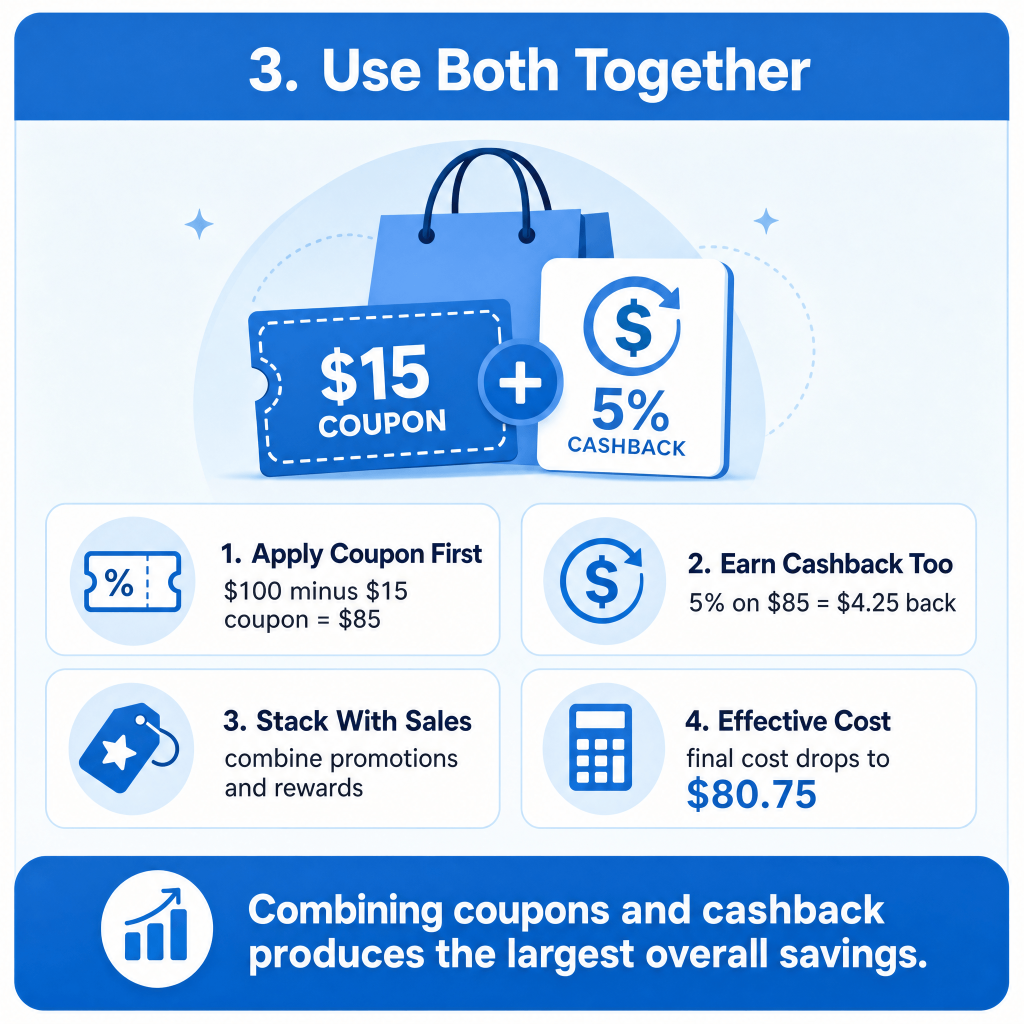
This is where smart shoppers gain the biggest advantage.
In many cases, cashback and coupons are not mutually exclusive.
A shopper may be able to:
- Apply a coupon code.
- Receive sale pricing.
- Earn cashback on the discounted purchase.
- Collect credit card rewards.
Example
Original Price: $100
Coupon Savings: $15
New Price: $85
Cashback Rate: 5%
Cashback Earned: $4.25
Effective Cost: $80.75
This combination strategy often produces the largest overall savings.
Which Method Requires Less Effort?
Coupons require:
- Searching for codes
- Testing multiple offers
- Verifying eligibility
Cashback typically requires:
- Activating the offer
- Shopping through the cashback platform
- Waiting for rewards
Both methods are relatively simple, but cashback often becomes more convenient once users establish a routine.
Winner: Cashback
For ongoing shopping habits, cashback often requires less effort.
Which Method Is Better for Large Purchases?
For expensive purchases, the answer depends on the available offers.
A large coupon discount often delivers bigger immediate savings.
However, cashback can become surprisingly valuable when percentages are applied to larger order totals.
Smart shoppers compare both options before completing checkout.
Winner: Depends on the Offer
Neither method consistently wins every time.
Popular Product Categories Where Both Methods Work Well
Many retailers offer both coupons and cashback opportunities across common consumer categories.
Air Purifiers
Amazon Category:
https://www.amazon.com/s?k=Air+Purifiers&crid=PE1IT1YNDDTX&sprefix=air+purifiers%2Caps%2C485&ref=nb_sb_noss_1
Air purifiers frequently participate in seasonal promotions, holiday sales, and special discount campaigns where shoppers may find both coupon and cashback opportunities.
Electric Toothbrushes
Amazon Category:
https://www.amazon.com/s?k=Electric+Toothbrushes&crid=3TP7CNCCEJPNY&sprefix=electric+toothbrushes%2Caps%2C371&ref=nb_sb_noss_1
Electric toothbrushes often appear in health and wellness promotions that can include coupons, cashback offers, or both.
So Which Saves More Money?
If you’re evaluating a single purchase, coupons often provide larger immediate savings.
If you’re looking at your overall shopping habits throughout the year, cashback can accumulate into substantial long-term savings.
The smartest approach is not choosing one over the other.
It’s using both whenever possible.
Choose Coupons If:
- You want instant savings.
- A significant discount is available.
- You’re making a one-time purchase.
Choose Cashback If:
- You shop online regularly.
- No strong coupon is available.
- You want ongoing savings across multiple retailers.
Use Both If:
- The retailer allows stacking discounts.
- You want to maximize total savings.
Final Verdict
Coupons and cashback are both effective tools for reducing shopping costs, but they serve different purposes.
Coupons deliver immediate gratification and often provide larger discounts on individual purchases. Cashback rewards consistency and can generate meaningful savings over time.
For most shoppers, the best strategy isn’t choosing between cashback and coupons—it’s combining them whenever possible.
Winner for Immediate Savings: Coupons
Winner for Long-Term Savings: Cashback
Overall Best Strategy: Use Both Together
When used strategically, cashback and coupons can complement each other and help shoppers maximize value on virtually every online purchase.